Cardiotoxicity (toxic effects to the heart) is the primary reason 40% of medical drugs are rejected during the drug discovery process [1]. A novel computational chemistry method is being developed which aims to catch potential cardiotoxicity earlier in the drug discovery process – providing a solution for a key challenge in drug development, and saving lives and costs in the process.

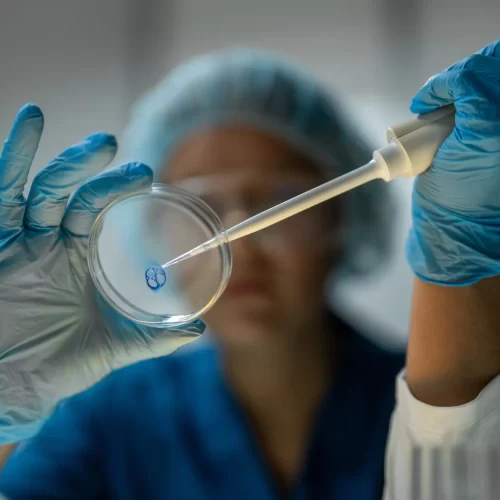
A scientist in the laboratory during the drug discovery process

Background

Four out of 10 drugs fail during the drug discovery process due to lethal toxicity to the heart [1]. In addition to loss of life and impact to health, there are also significant financial costs, and lost time and resources.

The existing modelling approaches used in the earlier stages of drug development struggle to correctly identify potential cardiotoxicity [2], meaning drugs can often only be removed from the development process after they have already had the potential to cause harm to life. This leads to the avoidable expenditure of significant financial resources and human effort.

There is a vital need for more effective in silico modelling (experimentation performed by a computer) earlier in the process of drug development to identify and quantify this risk before reaching human clinical trials.

The solution

A new method under development by AWE overcomes the limitations of traditional in silico methods and focuses on the atomistic modelling of drug molecules and the receptors they bind to – providing a deeper understanding of the problem. By understanding of the mechanisms of toxicity through simulations, unsuitable drug candidates can be removed from the development pipeline earlier in the process.

Unlocking the ability to do this provides significant benefits, including streamlining the drug development process by reducing the time and cost of bringing a drug safely to market. These savings effectively lower the barrier to drug development and make it more economical to develop treatments for rare, poorly understood, and challenging diseases.

In addition, the reduction of drug development costs would be expected to ripple across the supply chain – reaching health and social care providers. By lowering the cost of drugs, it allows financial resources to be allocated elsewhere in the care system and improve standards across the sector.

Key benefits

  • The potential for an efficient and accurate method for in silico modelling of cardiotoxicity – saving lives, resources, and time compared to existing methods.
  • Hundreds of millions of pounds could be saved over the lifetime of each new drug that does make it to market .
  • This technology will be complimentary to experimental techniques in vitro (outside a living organism such as a test tube or culture dish) and in vivo (in a living organism).
  • There is further potential to reduce failure rates of candidate drugs and redesign existing failed drug pipelines by designing new compounds and databases without the risk of toxicity to the heart.
  • The method is anticipated to improve accuracy and reliability of toxicity levels modelled – with the potential for the level of accuracy continuing to improve over time as more data is collected.
  • There is no known equivalent competitor for this technology currently on the market.
  • Once the present cardiotoxicity prediction method is established, it will be possible to investigate and develop equivalent methods for other mechanisms of cardiotoxicity, or toxicity to other organs or biological systems.
Identifying cardiotoxicity: scientific analysis during the drug discovery process

Potential applications

A scientist analysing data and results

Measuring cardiotoxicity in the drug development process

By ruling out drug molecules that would fail human clinical testing sooner, it enables scientists to streamline the drug testing process to solutions which do not pose this risk – saving costs, lives, resources, and delivering impact. These cost savings can then go into progressing other medical research and drug development, ultimately allowing the potential for more life-saving drugs to reach patients more efficiently.

Potential for development beyond toxicity to the heart

There is also potential for this technology to be developed further to improve drug discovery beyond cardiotoxicity, such as drug design, determining other areas of drug toxicity, and even drug delivery systems.

Cardiotoxicity: examining under the microscope

References:

[1] Garrido, A. et al, “hERG toxicity assessment: Useful guidelines for drug design” Eur. J. Med. Chem. 2020; 195: 112290.

[2] Stergiopoulos, C. et al, “Prediction of hERG inhibition of drug discovery compounds using biomimetic HPLC measurements” ADMET and DMPK 2021; 9 (3): 191-207.

Speak to us about licensing

If you would like to discuss this technology or collaboration opportunities with our team, please get in touch below.

"*" indicates required fields

This field is for validation purposes and should be left unchanged.